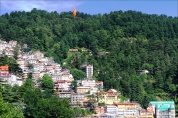
 Day 1 Delhi - Shimla
In the morning after early breakfast drive to Shimla by Toyota Innova Car. Lunch enroute. Upon arrival in Shimla, transfer to hotel. Evening free to explore the Mall Road. Dinner and overnight stay at the hotel.
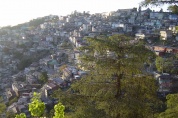 Day 2 Shimla
Morning visit Indian Institute of Advanced Studies built in 1888. Situated on a hillock, this was formally the palace of the British Viceroy. Also visit the Jakho temple. Evening visit The Mall the main shopping area of Shimla and The Ridge.
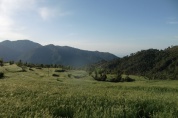 Day 3 Shimla - Sarhan
We start our jeep safari to Sarhan Enroute; we visit the palace in Rampur. We drive further the steep mountain and arrive in Sarhan (1950m). Sarhan, the tiny village offers the splendid views of Shrikhanda Mahadev Peak (5155m). You will also visit the famous Bhimkali Temple, the big attraction of Sarhan. Overnight lodge.
Sarhan (2125 m): The gorgeous spectacle of the Himalayan ranges with the unspoilt pastoral loveliness of an unpretentious village, Sarahan is truly a haven tucked away in the foothills of the Himalayas. Situated in the Sutlej Valley, on way to district of Kinnaur, Sarahan was the old capital of Rampur Bushair, one of the biggest princely states in Shimla hills. The major attraction in Sarahan is centuries-old Bhimkali Temple and Raja Bushair Palace. Steeped in legend, the temple complex is a resplendent example of hill architecture. Sarahan is also the gateway to Kinnaur.
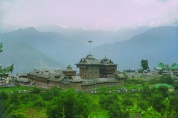 Day 4 Sarhan - Sangla
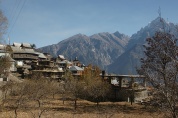
Drive along the spectacular Hindustan Tibet road which s carved in a rock and goes along the wild Sutlej River. A view of Kinner - Kailash Peak is splendid from Sangla. Visit remote villages of Rackcham and Chitkul. On arrival in Sangla check in and overnight at camp. Sangla Valley: This valley starts 57 kms. Short of Kalpa which has been named after a beautiful & populous village Sangla. Sangla is situated on the right bank of Baspa river 17 kms from Karcham. Journey from Karcham onwards is enjoyable and adventurous throughout the valley. The natural scenery all around and the eternal snow view are picturesque and charming. It is also known as Baspa Valley since Baspa River flows through this area. This is the most charming valley in the entire District of Kinnaur. A temple dedicated to Nages god is worth a visit & other places are Sapni, Rackchham, Kilba, Kamru Fort which can also be visited. There are post offices, banks, rest houses for the convenience of the visitors.
 Day 5 Sangla - Kalpa
Morning visit Kamru village and fort. Later travel by surface from Sangla to Kalpa located in backdrop of Kinner Kailash mountain range. Evening free to explore Kalpa village. Kalpa (2759 m): Beyond Recong Peo (14 kms. from Powari) on the link road, is the main village of the District - Kalpa. Across the river, facing Kalpa is the majesty of the Kinner Kailash range. This is a spectacular sight early in the morning as the rising sun touches the snowy peaks with crimson and gold light.
 Day 6 Kalpa - Tabo
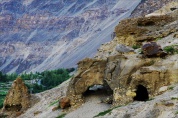
Travel by surface from Kalpa to Tabo enroute visiting Nako village beautifully located on banks of a small lake. On arrival in Tabo check in and overnight at guest house. Tabo Monastery: It is another big gompa for serving the population of eastern side. It belongs to the tenth century and is located 50 kms from Kaza. It is a famous gompa next to Tholing Gompa in Tibet. It has about 60 Lamas and a large collection of Scriptures, wall paintings etc. Murals of this gompa have a great similarity to that of the Ajanta paintings.
 Day 7 Tabo - Kaza
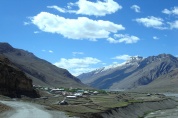
Morning visit Tabo monastery. Later travel to Kaza enroute visiting Lalung and Dhankar Gompa. On arrival in Kaza check in at guest house. Dhankar Monastery: It is situated about 25 kms. East of Kaza and serves eastern part of central Spiti. Dhankar is a big village and erstwhile capital of Spiti Kingdom. On top of a hill there is a fort which uses to be the prison in olden times. The Monastery has about 100 Lamas and is in position of Budhist scriptures in Bhoti language. Principal figure is a Statue of “Vairochana" (Dhayan Budha) consisting of 4 complete figures seated back to back. It has relics in the shape of paintings and sculptures.
 Day 8 Kaza
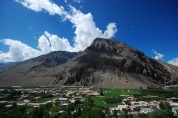
Morning visit the Ki monastery, 12 kms from Kaza. This centuries old gompa is a labyrinth of rooms and corridors – and at one time also acted as a fort. It houses valuable Thangkas and offers a panoramic view of the area. Also visit the small gompa at Kibber, 9 kms further ahead. Kibber at 4205 m/13,792 ft has the distinction of being the highest permanently inhabited village of the region.
Ki Monastery: It is situated 12 kms north of Kaza and serves the western population of Spiti. It is the oldest and biggest monastery of the valley and located at (4116 m) above Ki village. It houses beautiful scriptures and paintings of Budha and other goddesses. Lamas practice dance, sing and play on pipes and horns. Many Lamas get religious training here. It has murals and books of high aesthetic value.
Kibber (4205 m): It is locally known as Khyipur, one of the highest villages in the world at an altitude of 4205 m above sea level in a narrow valley surrounded by mountains from all sides. Rest Houses available for the visitors. Gette village, at a short distance away from Kaza, is the highest in the world with a height of 4270 m.
 Day 9 Kaza - Keylong
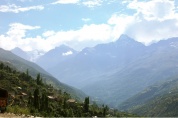
In the morning drive to Keylong via Kunzam Pass (4558 m/14,950ft) which provides beautiful views of CB ranges. Enroute visit several villages of Spiti and Lahaul valley. On arrival check in at hotel. Dinner and overnight stay at the hotel. Keylong (3340 m): Keylong is the district Headquarters of Lahaul Spiti on the main road to Leh over Rohtang. It is an oasis of green fields and willow trees, water streams surrounded with brown hills and snow capped peaks.
 Day 10 Keylong - Sarchu
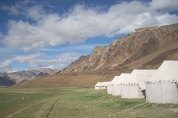
Today we will drive from Keylong to Sarchu over Baralachala Pass (4800 m). On arrival check in at camp at Sarchu. Evening free to walk around in Sarchu. Dinner and overnight in camp. Sarchu: It is the last border point between Himachal and Ladakh, where HPTDC put up a tented colony for the convenience of the tourists during summer season. It is situated at a distance of 116 kms.
 Day 11 Sarchu - Leh
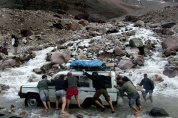
Early morning drive to Leh gives you a feeling of being in the high Tibetan Plateau. One climbs a series of Galta loops consisting of 32 hairpin bends on the way up from Sarchu and come out in Pang valley. It is here that one can divert to the right and visit the huge high altitude lakes of Tsokar and Tsemoriri. This region also has rare wild life like the Tibetan wild Ass, wolf, and the elusive Snow Leopard, the black-necked Crane and Tibetan Snow Cock. Cross to the other side of the Pang, Tzanspo River to continue drive up to yet another plateau for a long traverse on the legendary Moore plains. The highest of the Tibetan Plateau at 4200 Mts. Continue driving Tangling La (5280 Mts.) the second highest motorable pass in the world that commands breath taking views of the Zanskar range. A pleasant drive about 20 Kms brings you
to the Ladakhi hamlet, Gya, heralded by prayer flags. After crossing few more villages one reaches the great Indus River. Further drive to Leh town, overnight at hotel.
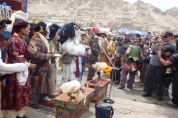
Leh: Leh is the fascinating capital of the Autonomous Hill Council of Ladakh, also known as Little Tibet. The important monasteries to visit in and around Leh are Shey, Thiksey, Hemis, Spituk, Samkhar as well as the Shanti Stupa, Stok Palace and main Bazaar. The Leh palace dominating the town was the former home of the Namgyal Dynasty. The monastic festivals are very popular and Hemis, Phyang and Lamayuru festivals in summer are visited by lot of tourists who throng to see the Cham Dances.
 Day 12 Leh
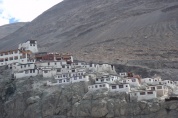
After breakfast full day sight seeing. Evening back to hotel for dinner and overnight stay. Shey Gompa is about 15 kms from Leh. It used to be the summer palace of the kings of Ladakh. There are lots of Stupas and Gompas built around the palace. Shey palace was built by Deldan Namgyal in the beginning of 17Th century AD. Main attraction in Shey is the 12m Shakyamuni Buddha statue inside the Dresthang Gompa.
Thiksey Gompa, close to Shey is about 17 kms from Leh. The monastery is considered to be one of the most beautiful in Ladakh and belongs to the Gelukspa order.
Hemis, about 45 kms south of Leh it is one of the most famous and largest monastery in Ladakh. It belongs to the Drukpa order and was founded in the early 17Th century. The setting is perfect with the monastery cradled in a lovely valley, surrounded by streams and fronted by long Mani walls.
 Day 13 Leh
(Leh local sight seeing) In the morning we will visit some other places. Evening back to hotel for dinner and overnight stay.
Leh Palace: The palace is a distinguished monument and a historical building. The nine- storied palace was built by the 17th century illustrious ruler of Ladakh Sengge Namgyal.
Jama Masjid: The historical mosque is situated in the heart of Leh town. It was built in 1666-67 A.D.consequent to an agreement between the Mughal Emperor Aurangzeb and then ruler of Ladakh,Deldan Namgyal.
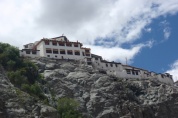
Spituk: The gompa stands prominently on the top of a hillock, 8 Kms.from Leh, and commands a panoramic view of the Indus Valley for miles. Many icons of Buddha and five thankas are found in 15th century monastery. There is also a collection of ancient masks, antique arms and an awe inspiring image of Mahakal.
Phyang: The monastery is situated 17 Kms. from Leh on the Leh - Kargil road. It was built by Tashi Namgyal in the later half of the 16th century A.D. and looks like a place from a distance. The gompa belongs to the Red Cap sect of the Buddhists. Hundreds of icons of Buddha are kept on wooden shelves .
 Day 14 Leh - Khardung La - Leh
In the morning drive for the Khardung - La Pass. This is the ultimate challenge of the trip. It is the highest motorable road in the world taking you to a dizzy 5,600m! The view from the top is spectacular, stretching from the Indus valley in the South over the endless peaks and ridges of the Zanskar range to the giants of the Sesser Massif in the North. You can feel proud of a true achievement as you finish the trip with your final satisfying descent. Evening back to Leh for dinner and overnight stay.
 Day 15 Leh - Delhi
In the morning take a flight for Delhi. Upon arrival at Delhi drive for local sight seeing. Evening transfer to international airport.


